Order before 2pm for UK next day shipping | US | EXPORT

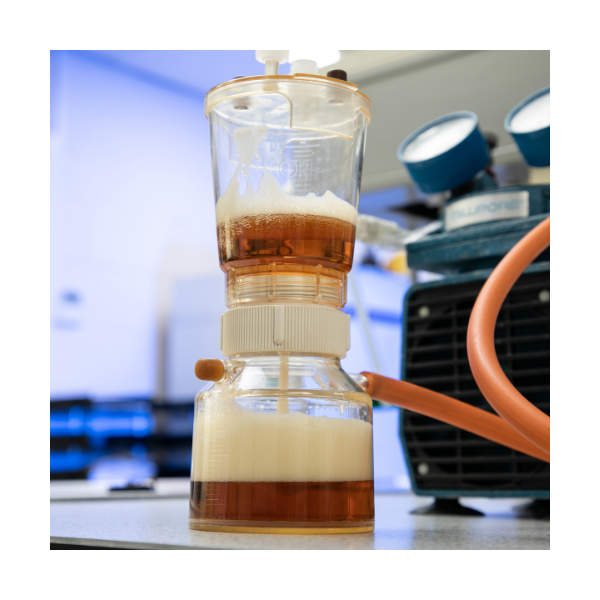
Sample Analysis by Membrane Filtration
Sample filtration (100 mL) to detect low levels of microbial contaminants using three types of selective media (copper sulphate, WLD, anaerobic Raka-Ray).
Availability:
Out of stock
SKU
LAB-MICROMF
Membrane filtration is a highly sensitive method used in microbiology to detect low levels of microbial contaminants, including bacteria, wild yeasts, and molds. In this technique, a measured volume of liquid (typically 100–1000 mL) is passed through a sterile membrane filter (0.45 µm or 0.22 µm pore size), which traps microorganisms.
The filter is then placed onto selective agar media, such as HLP, MRS, or WL Nutrient Agar, and incubated under appropriate conditions. After incubation, colonies are examined for identification and enumeration. This method is particularly effective for quality control in packaged beer, as it can detect even trace amounts of spoilage organisms that may affect product stability.
| Vegan | No |
|---|
Need technical advice?
Find all the your TDS and SDS here.
Talk to the people in the know by calling one of our qualified brewers and winemakers on 0115 978 5494


Murphy & Son, Alpine Street, Old Basford, Nottingham, NG6 0HQ, United Kingdom.
Murphy & Son Ltd | 0115 978 5494 | Legal Pages